Hip and glute pain in runners, why is it so common?
So what are the causes of hip and glute pain?
You may be wondering how the hip and glute muscles get overused or injured in the first place, right? Because they are so deep, it’s not like these muscles get “pulled” in the same way you might pull a calf muscle, and you rarely fall on your bum, so what is going on? The truth: it’s the end result of a long chain of compensations! Generally, it all starts with tight hip-flexors (either from too much/too soon marathon training, or from chronic shortness due to sitting at a desk for eight hours). Once the hip flexors become injured, they reciprocally inhibit the muscles on the other side of the joint. This basically means that the hip flexors “turn off” the glutes. What do you think happens when a big muscles stops working?
We are amazingly adaptable humans…a different muscle or set of muscles will try to take over the work. It’s like one employee with specialized knowledge of a work project becomes ill, so two others on his team take over one of his projects. They may complete it by the deadline, but it may be riddled with errors. In the body, we now have a case where one (or more) of the deep rotator muscles (employees trying to be good team players), are trying to bear the load that the gluteus maximus (sick employee) usually bears. The two muscles have completely different axis of rotation, their force-couples are different, and they were overall designed to perform different actions. But if they don’t step in, who else will?
What does hip pain treatment look like?
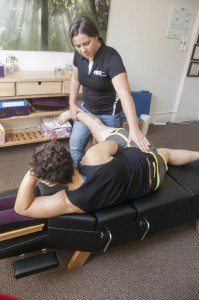
Once we enter this situation, it’s easy to extrapolate that those small muscles are about to get overworked and aggravated. An aggravated muscle is constantly contracting, which results in decreased circulation (thus decreased oxygen). This hypoxia (lack of O2) causes adhesions to form in the muscle. These are now your immediate source of hip or butt pain, even though tight hip flexors may have been the initial cause. Manual therapy and joint mobilizations can help both restore the integrity of the hip flexors as well as reduce adhesions in the specific deep external rotator muscle or other muscles that are causing you the pain.
Sometimes the Hip Isn’t the Real Problem
One of the trickiest things about hip pain is that the place you feel pain isn’t always where the problem started.
Pain in the front of the hip, side of the hip, buttock, or even the upper thigh can come from several different structures. Sometimes the hip joint itself is the source. Other times, the pain is actually coming from the low back, the sacroiliac (SI) joint, irritated nerves, muscles, or connective tissue surrounding the pelvis.
Rather than assuming every painful hip needs the same treatment, I perform a thorough evaluation to determine which tissues are actually contributing to your symptoms.
That allows us to focus treatment where it will be most effective instead of simply chasing pain from one area to another.
Hip Pain Can Feel Very Different From Person to Person
Not everyone’s hip pain feels the same, and the way your symptoms behave can provide important clues about what’s going on.
You might notice:
- pain deep in the groin
- aching on the outside of the hip
- soreness in the buttock
- pain that travels down the thigh
- stiffness after sitting for long periods
- sharp pain getting out of the car
- discomfort rolling over in bed
- pinching during squats or lunges
- clicking or popping in the hip
- weakness climbing stairs
- pain after walking long distances
- discomfort while running
These different patterns often point toward different structures being involved. During your visit, we’ll look at how your symptoms behave, how your joints move, how your muscles function, and how your body moves as a whole to determine the best course of treatment.
Common Causes of Hip Pain
Hip pain isn’t a diagnosis. It’s a symptom that can have many different causes.
Some of the conditions I commonly evaluate and treat include:
Hip Impingement (Femoroacetabular Impingement)
Hip impingement occurs when the bones of the hip don’t move together as smoothly as they should. This can create a pinching sensation in the front of the hip, especially when squatting, sitting, or bringing the knee toward the chest.
Gluteal Tendinopathy
Pain on the outside of the hip is often blamed on bursitis, but many people actually have irritation of the gluteal tendons. This commonly hurts while walking, climbing stairs, or lying on the affected side.
Hip Arthritis
Arthritis can lead to stiffness, reduced motion, and pain with everyday activities. While chiropractic care can’t reverse arthritis, improving joint mobility, muscle function, and movement patterns can often help people stay active with less discomfort.
Hip Flexor Strain
The muscles at the front of the hip can become irritated from sports, prolonged sitting, or repetitive movements. Treatment often includes reducing muscle tension while improving strength and movement control.
SI Joint Dysfunction
Pain near the back of the hip or buttock sometimes comes from the sacroiliac joint rather than the hip itself. Fortunately, these conditions can often be distinguished through a careful examination.
Labral Irritation
The hip labrum helps deepen and stabilize the hip socket. While not every labral tear causes symptoms, irritation of this tissue can create catching, clicking, or deep groin pain.
My Approach to Hip Pain Treatment
When people think of chiropractic care, they often picture an adjustment.
Adjustments can absolutely be helpful when they’re appropriate, but they’re only one piece of the puzzle.
Depending on your evaluation, your treatment may include:
- chiropractic adjustments
- joint mobilization
- soft tissue therapy
- muscle release techniques
- movement assessment
- stretching when appropriate
- strengthening exercises
- balance and stability training
- home exercises
- education about modifying activities during recovery
My goal isn’t simply to help your hip feel better today. It’s to understand why the problem developed in the first place so we can improve your movement and reduce the likelihood that the pain keeps coming back.
Hip Pain and Hypermobility
People with hypermobility often experience hip pain differently than those without hypermobile joints.
If you have Hypermobile Ehlers-Danlos Syndrome (hEDS), Hypermobility Spectrum Disorder (HSD), or you’ve simply always considered yourself “double-jointed,” your joints may already move farther than average. In those cases, aggressive stretching or forceful adjustments can sometimes make symptoms worse rather than better.
Instead, treatment often focuses on improving stability, reducing muscle guarding, restoring normal movement where joints are actually restricted, and strengthening the muscles that support the hip.
Because I frequently work with hypermobile patients, I tailor treatment to your body’s unique needs rather than applying the same techniques to everyone.
What to Expect at Your First Visit
Your first appointment is about much more than finding the spot that hurts.
We’ll start by talking about your symptoms, your goals, and the activities that have become difficult because of your hip pain.
Next, I’ll perform an evaluation that may include:
- movement assessment
- strength testing
- flexibility testing
- orthopedic testing
- neurological screening when appropriate
- assessment of the hips, pelvis, SI joints, and low back
Once we’ve identified the likely contributors to your symptoms, we’ll discuss what I found, answer your questions, and begin treatment if appropriate.
You’ll also leave with a plan for what to do between visits, which may include specific exercises or movement modifications to help you continue making progress at home.
Getting You Back to the Activities You Love
Hip pain has a way of creeping into nearly every part of life.
My goal isn’t simply to reduce pain. It’s to help you get back to doing the things that matter to you.
That might mean returning to:
- hiking in the East Bay hills
- running
- weightlifting
- CrossFit
- pickleball
- yoga
- cycling
- gardening
- playing with your kids
- walking your dog
- climbing stairs comfortably
- sleeping through the night
Every treatment plan is individualized based on your goals, your body, and the activities that are most important to you.
Frequently Asked Questions
Should I keep walking if my hip hurts?
In many cases, gentle movement is actually helpful. The right amount depends on what’s causing your pain. During your visit, we’ll discuss which activities are safe to continue and which may need to be temporarily modified while your hip heals.
Can chiropractic care help hip arthritis?
While chiropractic care can’t eliminate arthritis, improving joint mobility, reducing muscle tension, and improving strength and movement patterns can often make everyday activities much more comfortable.
Do I need an X-ray or MRI before coming in?
Not necessarily. Many causes of hip pain can be evaluated through a thorough history and physical examination. If imaging would help clarify your diagnosis or guide treatment, I’ll let you know.
Can you help if I’ve already tried physical therapy?
Yes. Many of my patients have already tried physical therapy, massage, injections, or other treatments before coming in. Sometimes a different perspective or combining hands-on treatment with targeted exercises can make a meaningful difference.
Is my pain coming from my hip or my back?
That’s one of the most common questions I hear. Because the low back, pelvis, SI joints, and hip all work closely together, pain can sometimes be misleading. A thorough examination helps determine which structures are contributing to your symptoms.
How many visits will I need?
That depends on your diagnosis, how long you’ve been dealing with the problem, your activity level, and your goals. Some people improve quickly, while others with more persistent or complex conditions benefit from a longer course of care. We’ll discuss realistic expectations after your evaluation.
Why Patients Choose Riverstone Chiropractic
Choosing a chiropractor isn’t just about finding someone who treats hip pain. It’s about finding someone who takes the time to understand your individual situation.
At Riverstone Chiropractic, you’ll receive one-on-one care in a welcoming, inclusive environment where treatment is tailored to your needs.
Patients appreciate that I offer:
- Thorough evaluations that look beyond the area that hurts
- Over 15 years of hands-on experience treating musculoskeletal pain
- Manual therapy combined with personalized rehabilitation exercises
- Gentle treatment that is adapted to your comfort level
- Experience working with runners, hikers, weightlifters, and active adults
- An affirming space for LGBTQ+ patients
- Neurodivergent-friendly care, including silent appointments and sensory accommodations
- Experience treating people with hypermobility, hEDS, and Hypermobility Spectrum Disorder
- Convenient Oakland location with free neighborhood parking
Whether your goal is getting back to hiking, sleeping comfortably, or simply walking without pain, we’ll work together to create a plan that helps you move with greater confidence and less discomfort.
Related resources:
Why Does My Hip Hurt When I Sleep?
Hip Pain Going Up Stairs
If you are tired of suffering with hip and glute pain and would like to schedule a free consultation with an Oakland chiropractor, please call (510) 465-2342 or book online.